
Hardware Diagnostic Report: 2018 Mac mini (Intel, T2)
Recently worked on debugging an issue with a Mac Mini that wasn’t booting.
Recently worked on debugging an issue with a Mac Mini that wasn’t booting.

Today we’re setting up What’s Up Docker (WUD for short), a little self-hosted tool that keeps an eye on your Docker containers and tells you when a newer version of an image is available.
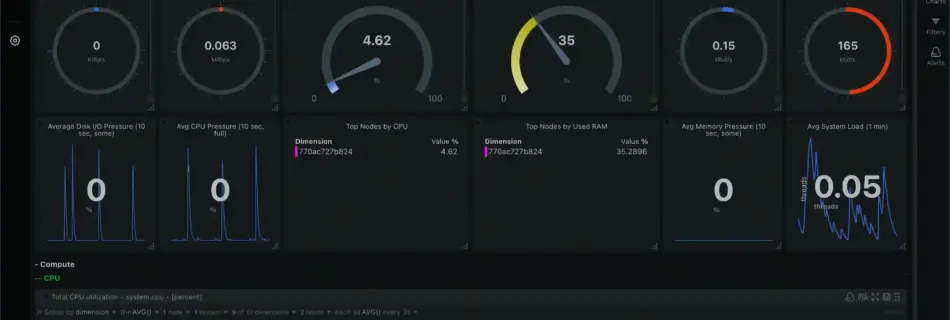
Today we’re getting Netdata running in Docker and shaping the setup so it’s painless to back up.

If you’re running LibreNMS on a server somewhere and you’ve got a Raspberry Pi sitting on the same network, it’s worth pulling that Pi into your monitoring. It draws almost no power, it’s always on, and once it’s reporting data you’ll have graphs for CPU, memory, disk, network traffic, and temperature with very little effort. …
Read more “How to Install and Configure SNMP on a Raspberry Pi for LibreNMS Monitoring”
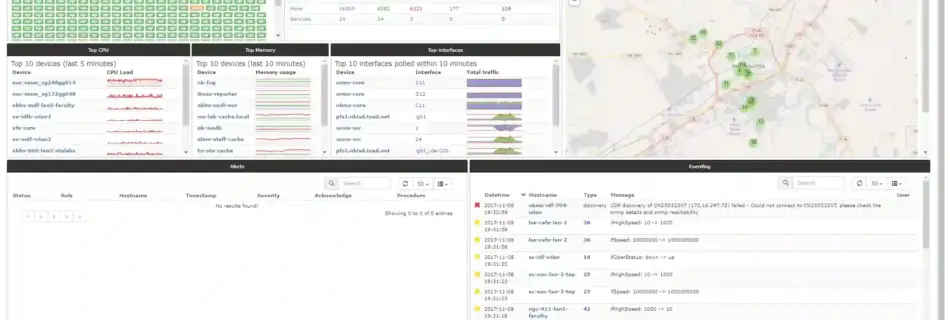
Many developers set up LibreNMS using Docker to monitor infrastructure via SNMP. However, keeping tabs on public or internal websites requires a different approach. LibreNMS can perform HTTP and HTTPS availability checks that function just like a curl command, tracking response times and alerting you if a site drops. If you deploy LibreNMS using the …
Read more “How to Monitor Websites and HTTPS Endpoints in LibreNMS via Docker”

This little article is more for my own notes. Hoping to add more details later. What is the Mandelbrot Set? The Mandelbrot set is a set of complex numbers defined in the complex plane1. It exhibits great complexity and is popular for its aesthetic appeal and fractal structures1. The set is defined as the complex …
Read more “Understanding the Mandelbrot Set, the Julia Set, and Their Relationship”

Recently, I encountered an issue where my Macbook was running out of space due to SystemData having a size exceeding 300 Gigabytes. If you’re encountering a similar issue, my specific issue had to do with a failed backup that didn’t resolve itself. If you open the Disk Utility, on the left side you can click …
Problem By default, the Raspberry Pi Zero generates a random MAC address for WiFi connections to limit device tracking. While this is a good privacy feature for mobile devices, it makes it difficult to track and manage the device on your home network. Solution Disable MAC randomization by creating a NetworkManager configuration file. Steps 1. …
Read more “Disable WiFi MAC Randomization on Raspberry Pi Zero”

Recently, I was wrestling with some performance issues on my Django website. I’m using Celery to handle background tasks, specifically processing uploaded images using OCR via Tesseract. Initially, things seemed to run smoothly with a few concurrent uploads. However, as the number of simultaneous image uploads increased, the processing time for each file ballooned dramatically, …
Read more “More Workers, Slower Progress? Why More Isn’t Always Better for CPU-Bound Celery Tasks”

Gaining Access to a Docker Container That Errors Out Docker containers are fantastic for encapsulating applications, but what happens when one stubbornly refuses to start? Maybe you’ve made a configuration blunder, introduced a code error, or encountered a pesky dependency issue. If the container exits immediately with an error, how do you fix it? In …
Read more “Gaining Access to a Docker Container That Errors Out”